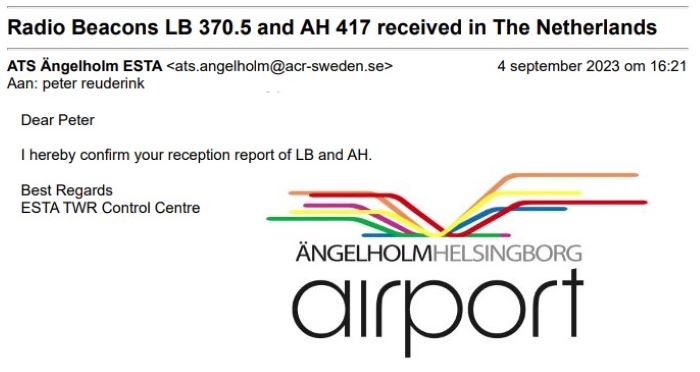
A QSL for my reception of two NDB (Non Directional Beacons) servicing Ängelholm Airport in South Sweden: LB-370.5 and AH-417. The numbers indicate the frequency in kHz. These beacons are located at 698 and 696 kilometers from my home QTH.
"It's not true I had nothing on, I had the radio on" - Marilyn Monroe
A QSL for my reception of two NDB (Non Directional Beacons) servicing Ängelholm Airport in South Sweden: LB-370.5 and AH-417. The numbers indicate the frequency in kHz. These beacons are located at 698 and 696 kilometers from my home QTH.
Last weekend I participated in the “SQUEEZE 100” NDB event, organized by the NDBlist group. Aim was to log 100 NDBs (Non Directional Beacons) in an as small frequency range possible. Hence the name “SQUEEZE 100”.
I had participated in two earlier events this year in which I logged only 4 and 13 stations respectively. So I decided that I needed a bit of help and installed Pskov NDB software. The result was impressive. Not knowing what to expect I started monitoring between 300 and 500 kHz. After I had 100 NDBs logged I could start to zoom in a bit, trying to squeeze the frequency range.
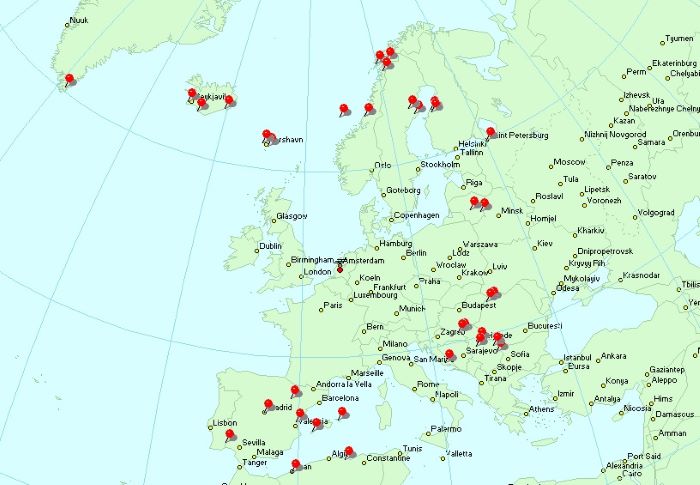
In total I logged over 183 NDBs. Between 350 and 403 kHz I had exactly 100 NDBs, close to 2 per kHz! The picture above shows the most distant ones I heard. With 3033 km OZN from Prins Christian Sund in Greenland was on top of my list. I was also very happy to catch three beacons from Iceland (KF-392; VM-375 and HN-330) and two from Algeria (ON-415; BJA-423).
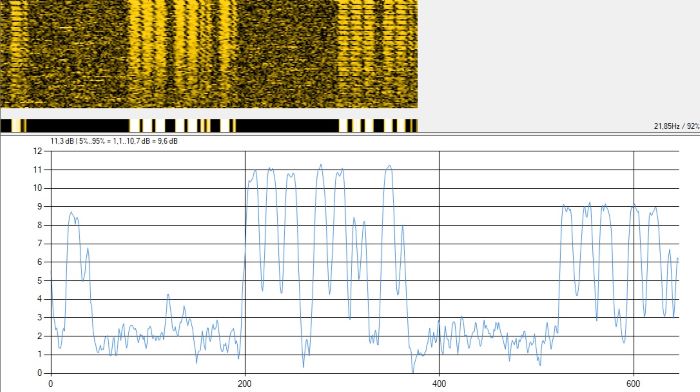
Below the Pskov screenshot of my OZN-372 log:
Don’t know why but I always liked NDB (Non Directional Beacon) DX-ing. Maybe because it because it is all about low power stations in CW. Maybe it is because they brought me a QSL that everyone was looking for in the 80-ies: Jan Mayen Island and Bjornoya (Bear Island) in addition to Andoya. In the EDXC country list Jan Mayen and Bjornoya, the latter being part of Spitsbergen/Svalbard, count as separate radio countries!
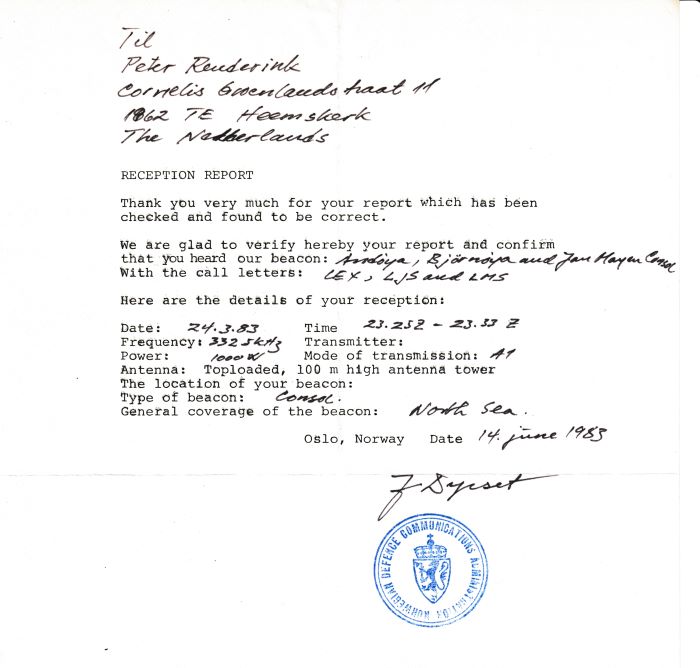
Actually i was quite surprised that NDBs are still in the air as navigation aids these days. I understand that the beacons that were mainly serving maritime traffic (like the ones above) are gone, but their are still plenty of airports that have an NDB up and running.
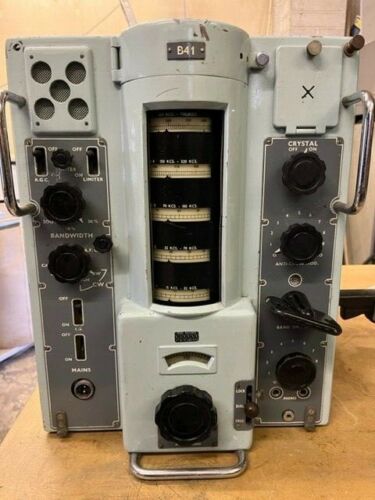
40 years ago I had this Murphy B41 tube receiver working for me on my NDB hunts. Designed shortly after WWII it was standard British Admiralty issue. It was rock solid and had a superb S/N performance, but it also weighed over 45 kgs! I vividly remember how much effort it took to carry it to the attic in my parents house. It was even equipped with a manual that described how you could effectively destruct the receiver should it risk falling in enemy hands.
Back to today: I opened this post with “Daddy’s got a brand new tool!”. It is called Pskov NDB. Of course many of you will probably know it already, but hey, I’m just 8 months back in business. NDBs have a periodic signal. With this knowledge a Fourier analysis technique is used to pull the CW signals out of the noise… So just record 10 to 30 minutes of long wave bandwith with your SDR, and let Pskov have a go at it. I’ve been playing with it for a day – and I love it already!
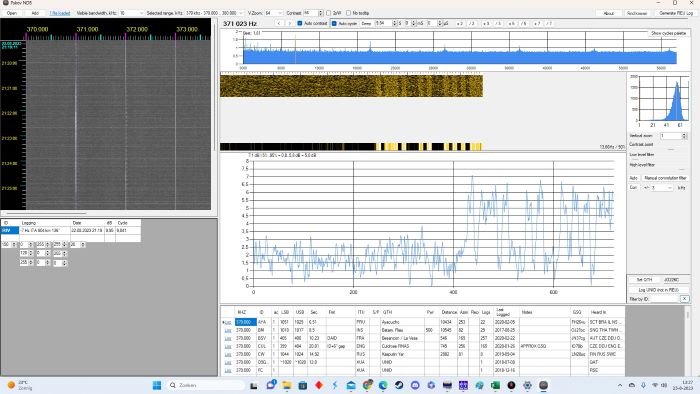
You can downloaded Pskov from the NDBlist site. The good news is “it is for free, and with your RSPdx receiver and laptop, you have to carry significantly less than 45 kgs!”. The bad news for me personally is that I do realize that I have programmed and done many Fourier analyses in the past working to get my PhD in Physics. But I really forgot how to do it….
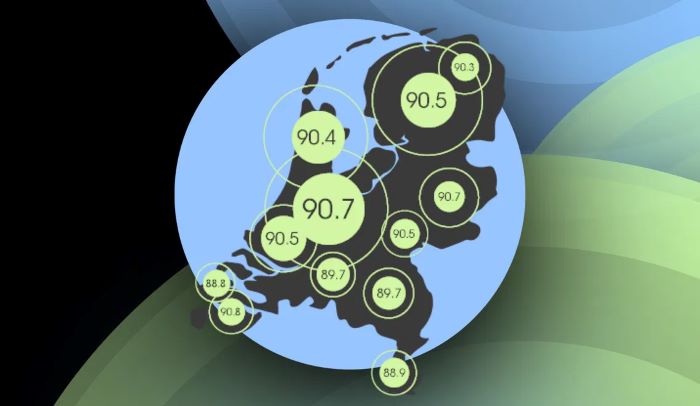
I received a QSL from Sublime FM 90.7 MHz, broadcasting from IJsselstein, The Netherlands. From September Sublime will no longer be received on FM.
After the allocation of FM frequencies to national and regional public radio there are 9 “packages” of frequencies left for commercial parties. These are sold via an auction mechanism. In the auction of last July “Mediahuis”, the company behind Sublime, gave up the Sublime frequencies. They were taken by newcomer Financial News Radio which acquired the rights until September 2035.
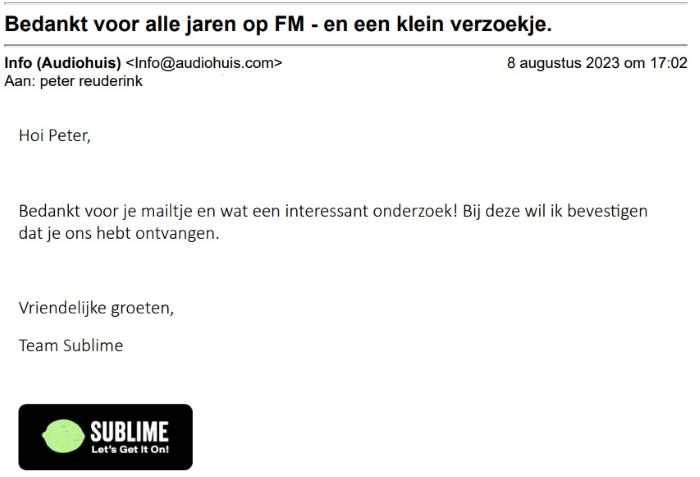
The fact that Sublime will disappear from FM (they will continue on DAB+ and internet streaming) made me send a QSL request to info@sublime.nl . Nowadays nobody at these networks knows what a QSL is, so I had to explain it a bit, after which I received a kind email from Audiohuis.
It is summer time and as a pensionado I really enjoy spending time at the campsite. But I’m still DX-ing. With my son’s old laptop, an SDRPlay RSPdx receiver, a Boni Whip Antenna and an MLA30+ loop I’m still “in business” on the campsite.
And not without success. I received Valparaiso Playa Ancha Radio, Wiluna and Charleville Radio, a few Italian local radio stations… and all with an old laptop, a less than 200 Euro receiver, and a 60 Euro antenna…. DX-ing has never been so affordable.
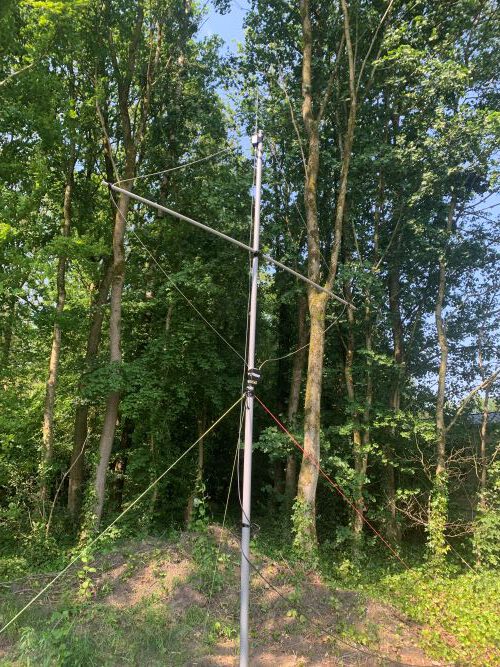
Below a picture of my antenna setup. We are camping here since April. Initially I had the PVC pipes without support. But now it got warmer the PVC piping flexed a bit more and required a little rigging.
Of course I’m just an amateur… a little over 5 kilometers from here there is the real stuff… The Celinex Tower in Hoogersmilde. It is 303 meters high.
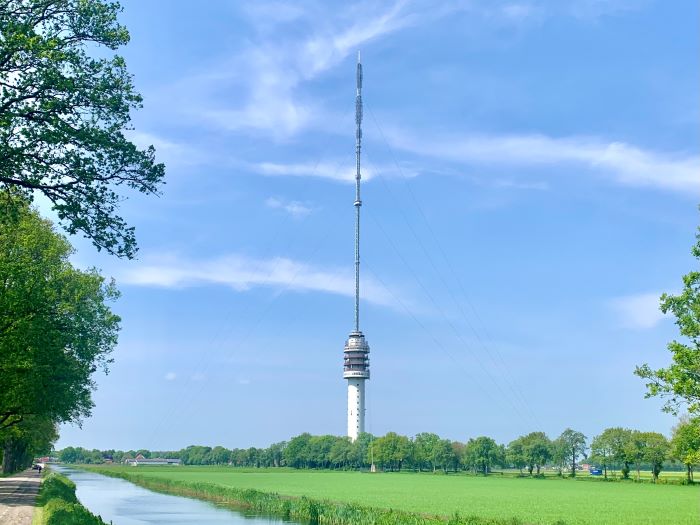
In 2011 it caught fire, and FM and TV reception in the north east part of the Netherlands was severely compromised as a result. Today analogue TV has gone…. not sure they would rebuild the antenna today?

Today I received an email Radio 292 newsletter. They apologize for not sending out QSLs of late due to a lack of time. Ofcourse you can always try to QSL this station via one of the many individual program owners of shows they relay. Check their website for more info.
Interesting is that they will relay programmes from the European Parliament on Radio 292 for the first time. Frequencies are 6070 and 9670 kHz:
May 6th : 9-10 h UTC
May 9th : 17-18 h UTC
May 13th : 9-10 h UTC
eQSLs are awarded. Reports should contain at least 15 minutes of content description and comments on signal quality. WebSDRs allowed. Send your reports to QSL@europarl.europa.eu
Radio Seabreeze has two transmitters operational. On 1395 kHz from Grou in the northern province of Friesland they use a 100 Watt transmitter. On the same frequency they operated a transmitter from Laren. As that resulted in issues with interference they moved the Laren transmitter to 1098 kHz.
As Laren is situated in the south-east corner of the province of North Holland (still with me😉?), this will benefit listeners in the central part of the Netherlands. More information on the Seabreeze website. Reception reports are welcome via their webform.
I recorded the announcement of their new frequency on this YouTube link.

Since a few weeks I’m member of “NDB list“, a must have for all NDB, DSC, Navtex fans. The NDB group organizes CLE’s, Coordinated Listening Events. Aim is to log as many NDBs in a certain frequency range over a period of 3 days.
Target for the 289th CLE was 270-320 kHz. Now I do like NDB hunting, but this is not my favourite part of the band with lots of noise and QRM from DGPS stations. And last night’s Aurora did not make things much better. I finished with a disappointing 4 logs only:
293 OB Brussel (BEL)
311 LMA Lintfort (G)
315 HOL Villacoublay (F)
319 VS Valenciennes (F)
All I can hope for is a better result next time!
I got into DX-ing – listening to remote radio stations – in 1979, when I was 17 years old. Those were the days we were experimenting with illegal 3-meter homemade transmitters with which you could connect with classmates after school. Mind you, we had no mobile phones, no internet, and no WhatsApp or something in those days!
Fortunately I never got caught by the police. What did catch me though was the radio virus… because what else was there to be heard on the radio bands??? The obsolete family radio, a Nordmende – the one you see in the header of this site – had al these remote locations on the dial… and so it started…
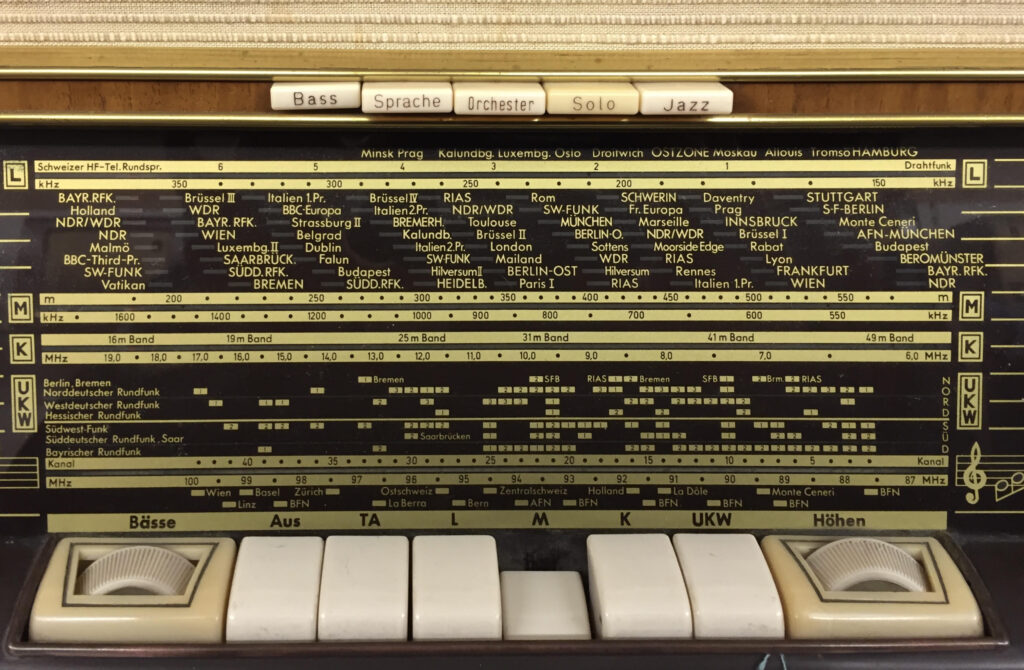
Family life, work, other hobbies resulted in less hours spent behind the receiver in the new millenium. But after I retired from work that radio virus got me again. Obviously, a lot has changed. Tropical wave bands are almost empty these days and the dominant language on the short wave bands seems to be Chinese. But there are new opportunities as well. With major broadcasters leaving medium wave, smaller stations can be heard. And then there is SDR… (and a lot of “computer mumbo jumbo” to be learned).
Lot’s of new worlds to explore! Interested? Join me on my journey via this blog!

© 2026 Peter's DX Corner
Theme by Anders Noren — Up ↑