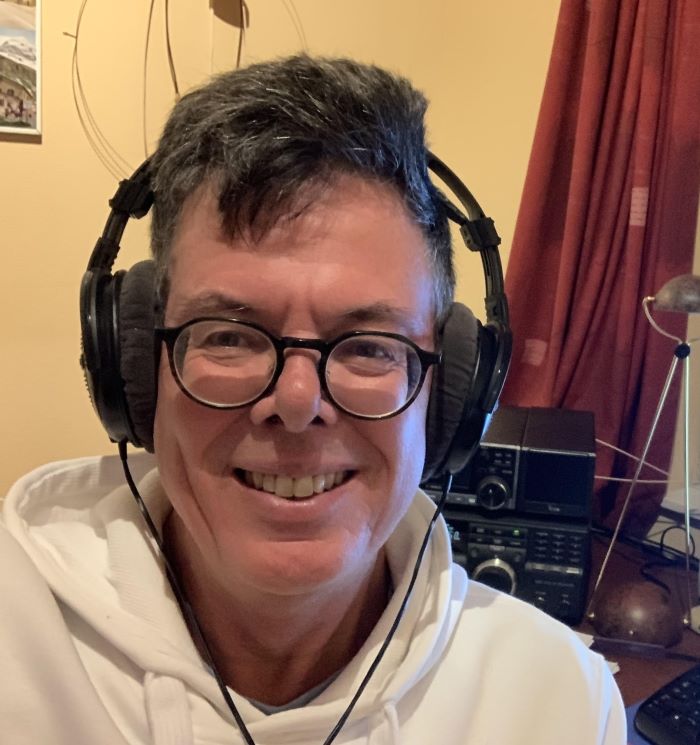
45 years ago I was active on 3 meter FM radio as a pirate station called Radio Arcadia. Nothing special, only 1-3 Watt, just enough to chat with school friends. And just enough to create a bit of interference on the radio of our neighbours if positioned my mid frequency on top of Hilversum 3.
We were active on 100+ MHz. Radio’s were already equipped with the 87-108 MHz band, but in those days Dutch legal stations were only broadcasting up to 100 MHz, later 104 MHz. So there was 4-8 MHz of bandwith available.
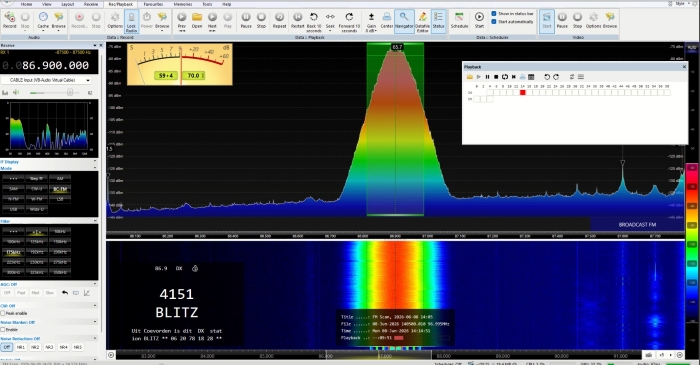
Radio Blitz suddenly popped up with a huge signal on 86.9 MHz
I thought FM radio pirates were sort of dead. A memory form the past. But here on my new location in Drenthe the FM pirates are alive and kicking. Not only in the 100+ MHz band, but apparently also below 87.5 MHz. In my youth that’s where you listened to police traffic (which wasn’t scrambled in those days). And so when screening the lower end of the FM band for Sporadic E DX I suddenly saw the very strong signal from Radio Blitz popping up on 86.9 MHz.
Whatsapp confirmation of reception
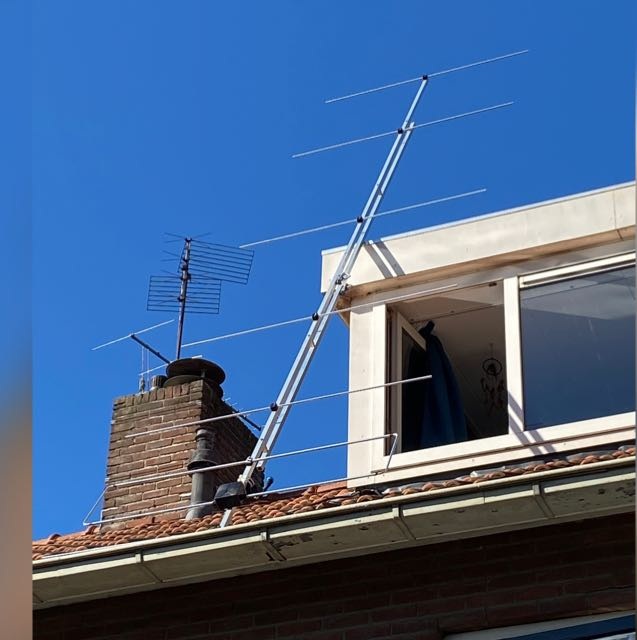
(e)QSLs are difficult to obtain, as are email contact addresses. But often a telephone number is mentioned on air or as RDS information, inviting you to send a Whatsapp. Now and then I just like to drop a message. Usually you get a friendly thank you like the one Radio Blitz sent me. Including a pretty interesting picture of their antenna configuration 😉.
DX-ing mediumwave pirates is nice because sometimes you have email correspondence with fellow radio enthusiasts. I received Radio Turftrekker on 1638 kHz. Operator Jeroen wrote that he was ‘spoon-fed’ with mediumwave pirate radio as his father is also a mediumwave pirate. As a small child, he was listened in. Occasionally he was allowed to say something on the radio.
But it is also nice because some of the station names used remind you of the heritage of the Netherlands. Radio Markies is an example. And so is Radio Turftrekker. While the next paragraphs are not really about radio or DX, I just enjoyed writing them. Skip it if you want, but if you like it, please leave a comment!
About the name of Radio Turftrekker
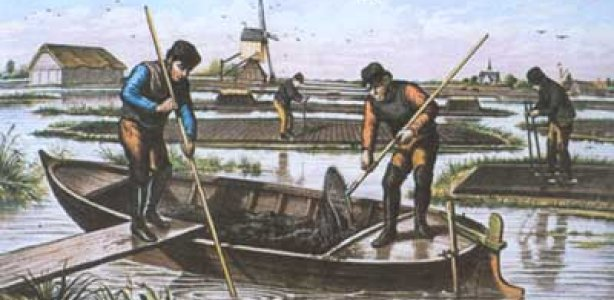
A “Turftrekker” or “Peat Puller” was a worker that extracted peat using a scoop with a net attached. Peat was used as a fuel to heat houses before we switched to coal (and Holland what late in doing so). However, with the peat being extracted, deep pools of water formed in Holland.
“God created the earth, except for the Netherlands, for the Dutch did that themselves” is a well-known Dutch saying referring to the polders and reclaimed lands. But what is often forgotten is that the same Dutch first lost almost half their country due to peat extraction.
“Turftrekkers” extracting peat. A picture from 1895 used in schools.
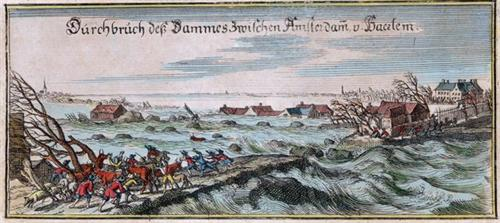
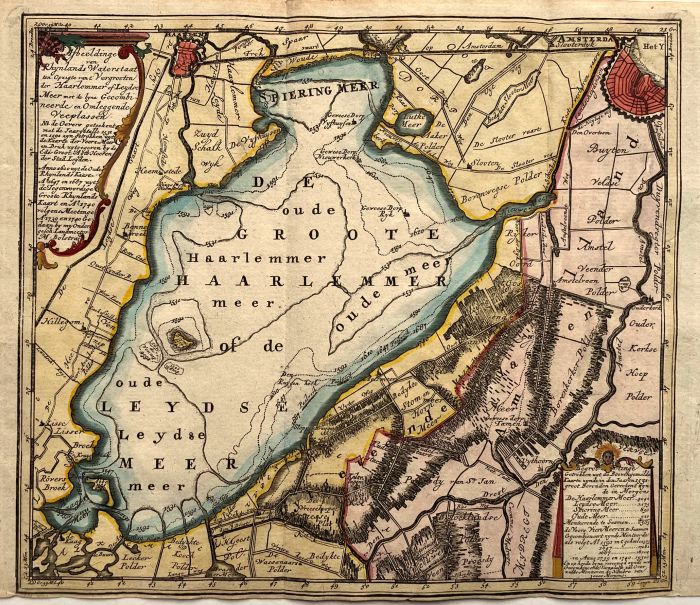
The prime example is the Haarlemmermeer (Haarlem Lake), the polder in which Schiphol (Amsterdam International) Airport is situated today. In the Middle Ages four lakes were formed as a result of peat reclaiming. Additional illegal reclaiming and storms resulted in the collapse of dikes, allowing the lakes to merge into what became the Haarlemmermeer. That lake was so large that it became an inland sea, and with southwesterly storms, it expanded ever further in the direction of Amsterdam.
The collapse of the dike between Amsterdam and Haarlem
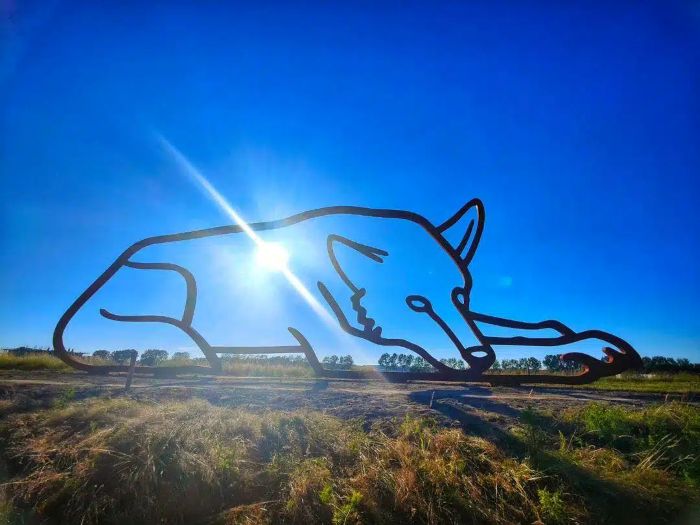
The Haarlemmermeer acquired the nickname “Waterwolf” as the water consumed more and more land. A beautiful artwork created in 2024 visualizes this. The Waterwolf seems to be at rest in this statue, as is the Haarlemmermeer.
The “Water Wolf” statue in the Haarlemmermeer. Finally at rest after 4 centuries.
Plans were made to reclaim the Haarlemmermeer as early as the 18th century. However, by then the lake was too large to be drained with windmill technology applied in the Beemster, Wormer, and Schermer polders. And so nothing could be done and devastating storms in 1836 caused parts of Leiden and Amsterdam to flood.
The Haarlmemermeer in 1740, top left the city of Haarlem, top right Amsterdam
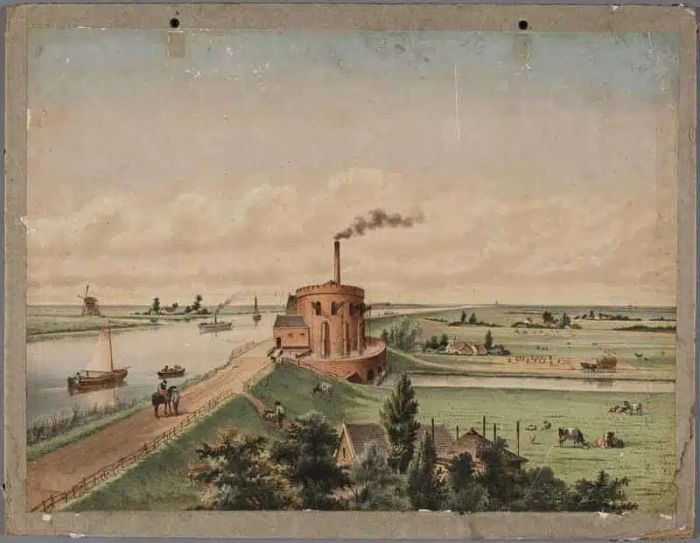
But fortunately there was the introduction of the steam engine. In May 1840, thousands of laborers began digging a 60-kilometer-long ring canal and constructing a ring dike with shovels and spades. Three steam pumping stations were built: De Leeghwater, De Cruquius, and De Lynden. On July 1, 1852, the Haarlemmermeer was completely drained, and the development and parcelling of the more than 18,500 hectares of new land could begin.
One of the steam engines draining the Haarlemmermeer
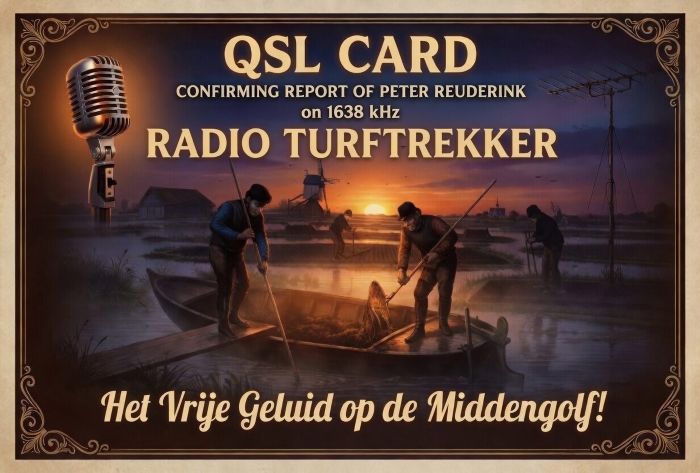
Back to Radio “Turftrekker”. Jeroen mentioned he didn’t have a QSL card. I proposed this design based on the school picture shown above. What do you think?
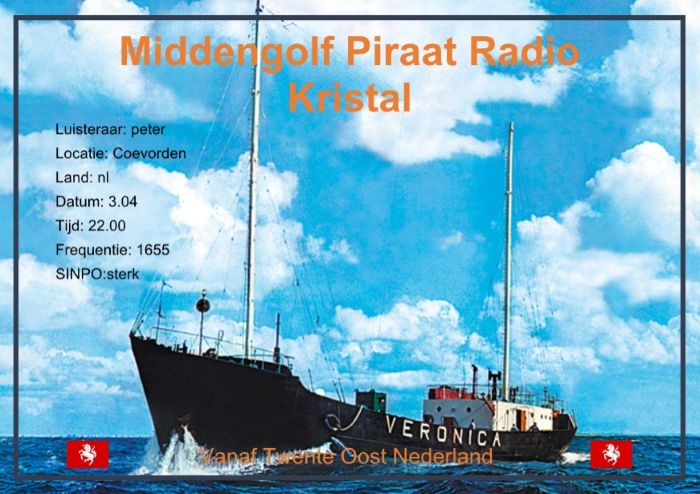
During the Pirate Hunt 2026 event I was able to log Radio Kristal, broadcasting from Twente, East Netherlands on 1655 kHz.
Operator Jan confirmed my reception with a nice eQSL featuring the offshore radiostation Veronica. The station I grew up with as a child.
Radio Kristal works with a tube transmitter and inverted V antenna. Jan mentioned that he is active for 47 years on AM and his station has been raided by the “Radiocontroledienst” (the authorities) twice.
Another catch during the Pirate Hunt 2026 held in the Easter weekend was Radio Alabama on 1620 kHz. Manfred from Radio Alabama was so kind to confirm my request with a kind email. He mentioned that he is broadcasting from the Netherlands with a staggering 2000 Watt homemade mosfet transmitter. But I’m afraid his location is on my null of the loop, and his antenna set-up might imply I’m a little bit in the dead zone.
And no the logo above is not the one from Free Radio Alabama. But I liked it a lot.
A year ago I received free radio station Radio Markies on 6300 kHz from The Netherlands. And as it is a hobby for the operator of Radio Markies as it is for us listeners, it took a little while before my report was confirmed. But this week I received a long personal email from the operator.
Radio Markies is active in the 50 meter band since 2023. The transmitter is fully home made. Below a the recording I made of my reception with the station ID. Reception was a bit noisy, but that might be because my antenna direction wasn’t optimal. You can hear a full ID: “Dus amateurs, luisteraars in het bijzonder, goedenavond, u luistert op dit moment live naar de 6300 Markies International 50 meter band”.
Radio Markies doesn’t have a QSL card, but if they want to make one I would suggest to use the character Markies de Canteclaer conceived by Marten Toonder (Markies is Dutch for Marquis):
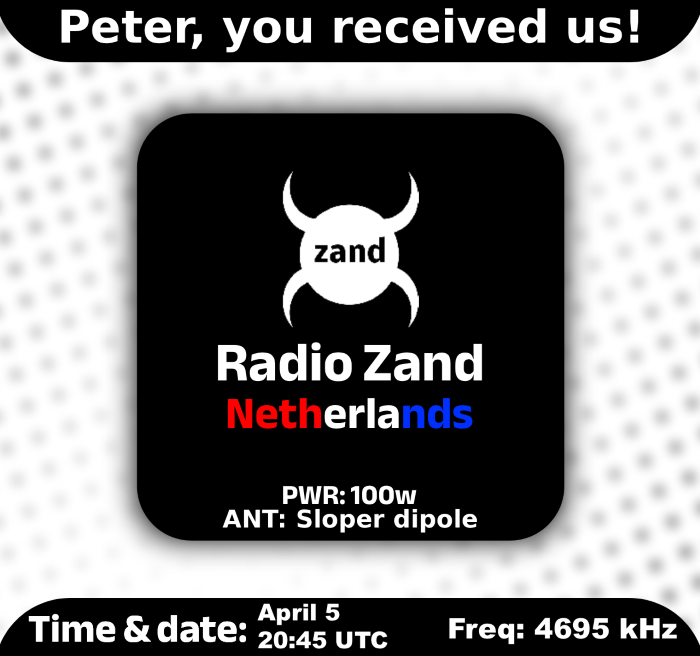
During the Easter weekend I participated in the Pirate Hunt. One of the stations I received was Radio Zand on 4695 kHz. It was the first time I received this station from the Netherlands, but on the internet it gained some fame as “the 17-year old that was broadcasting on the Russian Buzzer frequency of 4625 kHz”.
My report to radiozand(at)protonmail.com was confirmed with a nice personal eQSL:
eQSL Radio Zand, the Netherlands, 4695 kHz
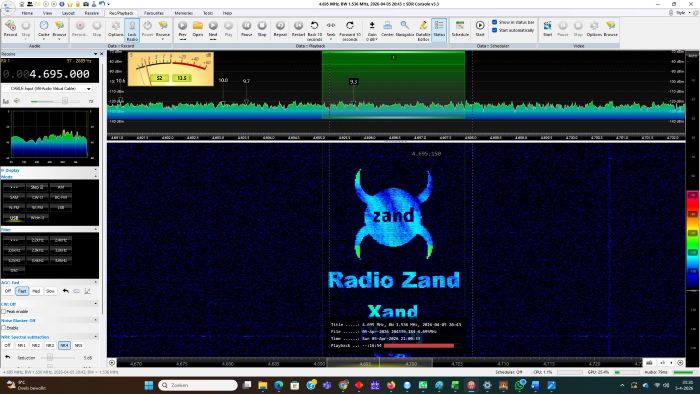
An interesting part of my reception of Radio Zand was their station ID in the SDR water fall. You can see this in the picture below, but check the video on my YouTube post.
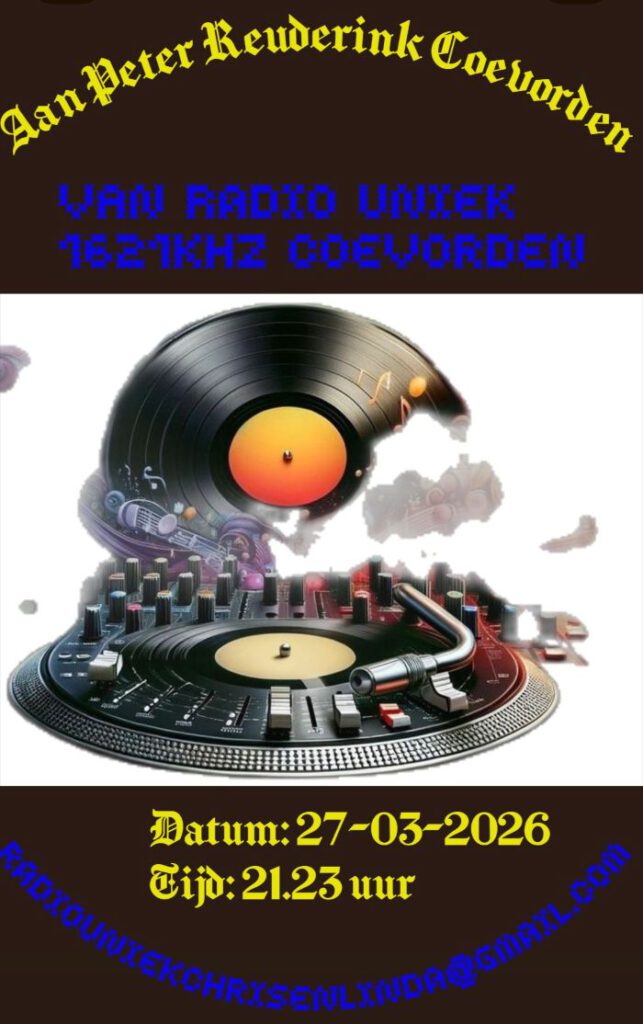
An eQSL from Radio Uniek. It was Hugo Matten who made me aware with his post that this pirate station says that they are broadcasting from Coevorden, my ‘temporary’ QTH until our new house is built. It is quite uncommon for radio stations to advertise their QTH, so maybe we should take it with a grain of salt. On the other hand: with the muncipality of Coevorden being almost 300 square kilometers you might wonder how much they really give away.
eQSL Radio Uniek, Coevorden, 1621 kHz
After I sent my report it was confirmed 5 minutes later, live in the broadcast:
A day later the eQSL was delivered in my inbox. Big thank you to Chris and Linda!
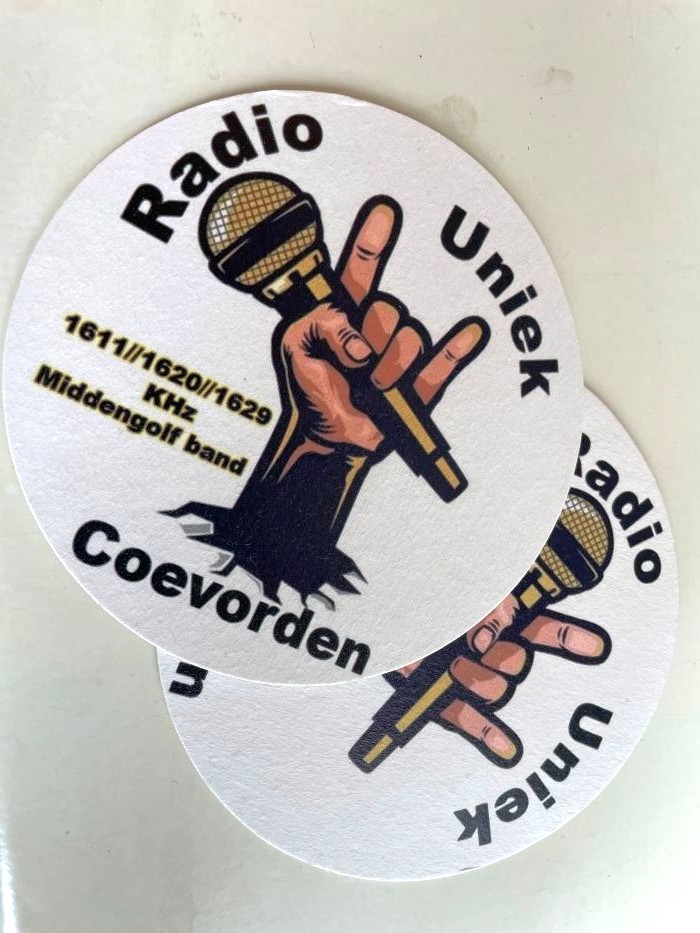
UPDATE: First time in 45 years that I got beer coasters for a reception report. Thank you Radio Uniek.
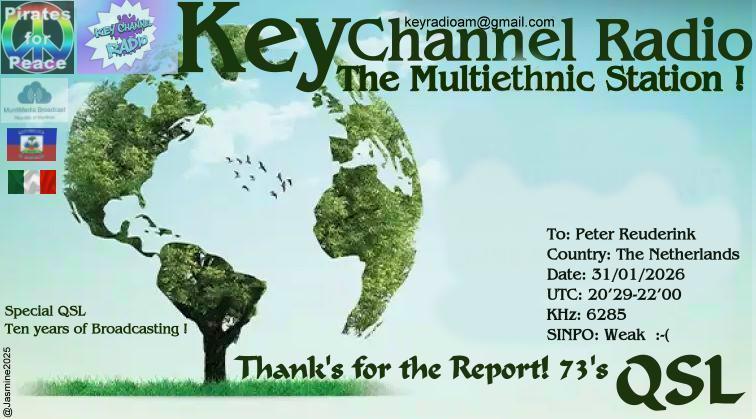
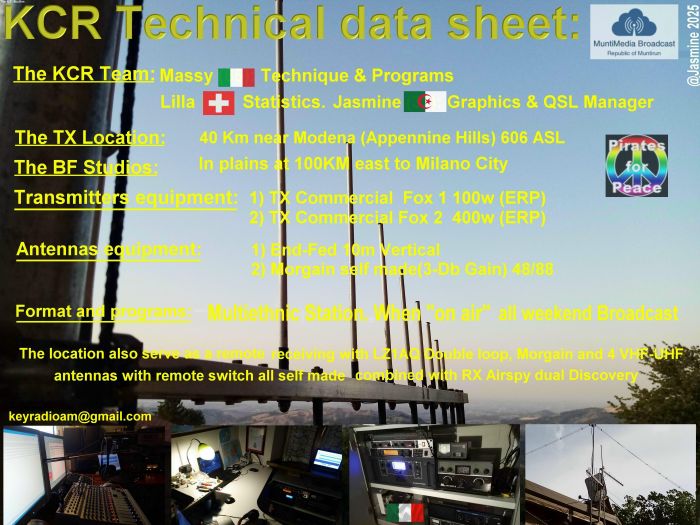
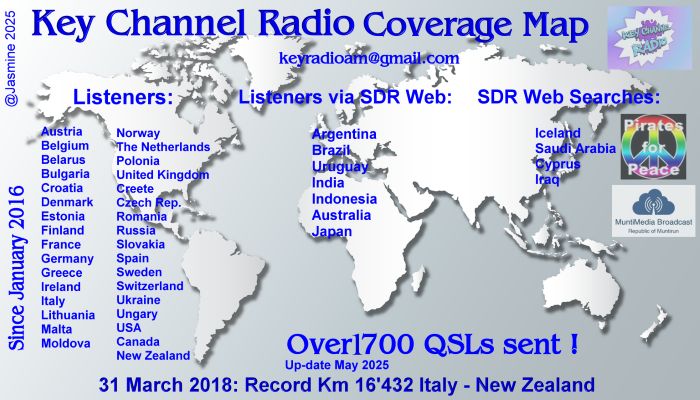
With a lot of relocation activities going right now I was busy, but more importantly I was compromised on the antenna options. That said, I didn’t want to miss out on another opportunity to catch Key Channel Radio, broadcasting from Italy. I was able to receive them on 6285 kHz.
Quality was just good enough to copy a few details like song titles like this Spanish version of The Piano Man by Ana Belén, followed by “Much more music… Key Channel”.
And yes I think I heard Bande Rumorose from Antonello Napolitano in the first part of the broadcast as well.
My report was sent to keyradioam@gmail.com. They also provided some news: “A a new partnership with Doctor Tim Artem World Music and Radio Monique since this year we have been collaborating with “Bande rumorose” of DX Fanzine. At the beginning of each of our broadcasts we broadcast it in a one-hour version. We’ll definitely be on the air at Easter when they’re hosting “Pirate Hunter 2026.”
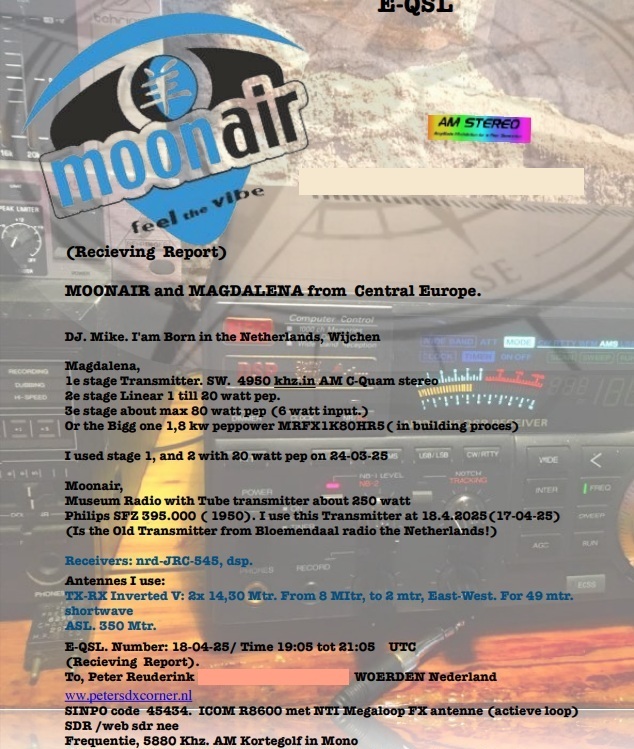
An e-QSL with lots of details from Moonair Radio, a Free Radio station from Central Europe. DJ Mike is from Holland, and the show I listened to was mainly in Dutch, but from the announcements made it was clear the the location is not in The Netherlands, but somewhere in “Central Europe”. I will not disclose the location, but given the distance I am surprised about the signal strength given an output power of only 250 W. Must be a decent antenna! And I understand why there was a bit of fading.
Mike also shared a nice video of the studio and transmitter equipment. Apparently he is also the operator of Radio Magdalena, a station that broadcasts in AM-stereo.
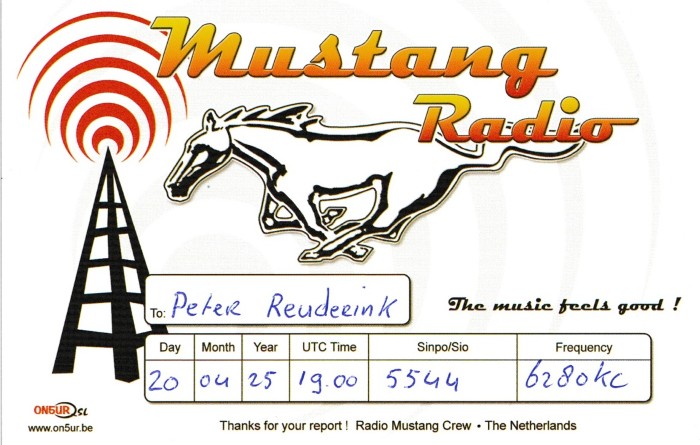
My reception of Mustang Radio on 6280 kHz, a Free Radio station from the east part of the Netherlands was confirmed with a kind email reply by station owner Herman.
About a week after the email bij Herman he sent me the beautiful QSL card!
BDXC : SWL 2262 PRe VERON : NL 14228 If you want to get in touch, just leave a message on one of my posts. Please note that I don't publish email addresses of verifiers which are not part of the public domain. So if you don't see the QSL address, just leave a message and I'll get back to you.
This is just a hobby site. Feel free to copy anything on my weblog. A link back to my site is appreciated when you do so. I try to provide accurate information, but if I'm wrong: don't blame me! I'm also not responsible for the use of sites I provide links to. I try to respect copyright rules, but should you think I made an infringement: just let me know via a message on the corresponding post and I will act accordingly.