The BBC Radio 4 long wave service from the Droitwich transmitting station has come to a quiet but historic end. For decades, the powerful 198 kHz signal beamed out from the iconic Wychbold masts near Droitwich in Worcestershire, reaching across the UK and deep into Europe. Together with auxiliary transmitters at Burghead and Westerglen in Scotland, it formed a resilient national network that ensured Radio 4 could be heard in remote areas, at sea, and even in parts of Ireland and mainland Europe where other signals faltered.
The closure on 27 June 2026 at 01:00 BST marked the final broadcast after the Shipping Forecast and “Sailing By,” followed by a poignant sign-off. A looped retuning message played briefly before the transmitter was powered down permanently on 30 June. This brought to an end 92 years of long wave transmissions from the site, which began in 1934 with the BBC National Programme and later carried the Light Programme, Radio 2, and finally Radio 4 from 1978. The aging equipment, including hard-to-replace high-power valves, had simply reached the end of its operational life, prompting the BBC to prioritise cost savings and digital alternatives.
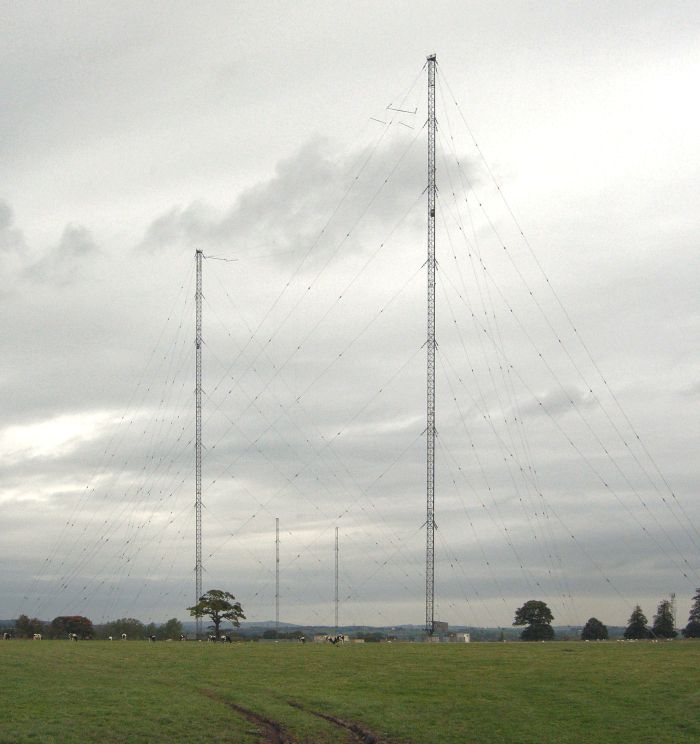
This switch-off represents the end of an era for British broadcasting. Long wave offered unparalleled coverage and reliability for generations of listeners, from wartime audiences to farmers checking the Shipping Forecast or night-shift workers tuning in. Its low-frequency waves could travel hundreds of miles by hugging the ground and reflecting off the ionosphere, a technological marvel in its time. While FM, DAB, and online streaming now dominate, the loss of this analogue lifeline has prompted nostalgia and even a campaign to heritage-list the towering 700-foot masts as symbols of a bygone broadcasting age. Droitwich’s silence closes a chapter that began nearly a century earlier, reminding us how technology evolves while leaving behind a rich auditory heritage.


A sad day.
I often passed the Droitwich transmitters which can be seen from the M5 motorway. But nowadays everything has to be digital.
Next to go will be the BBC Radio Five Live transmitters on 693/909 kHz. It is closing two of its low power Five Live transmitters at Redruth and Folkestone at the end of July.
My only hope is that governments will promote LPAM stations like we do in The Netherlands. But at a more reasonable fee (in The Netherlands the fees to be paid for song rights are ridiculously high when you are in a more densely populated area). And it would be nice if they would respect country frequency allocations.
Sad news indeed, but the world isn’t a museum.
I agree Franz. And folks have no clue what the costs of maintaining antenna masts like these would be. In the late 1960s, refineries emitted significant amounts of flue gases, SO₂, particulates, and other pollutants. Shell Pernis built two 213 meter tall chimneys that released these at high altitude, where winds disperse them over a much wider area. This greatly reduces ground-level concentrations near the densely populated Rotterdam area, lowering local air pollution and health impacts. Fortunately, today dispersion is not the solution anymore, and the refinery runs on clean refinery or natural gas with no sulphur, soot or other pollutants. New plants at the site now have their own little stacks again as we have at home and these tall chimneys, the two tallest free standing buildings in The Netherlands are basically obsolete. But guess what: now the same stacks that once were target of environmentalists are now considered to be industrial heritage…