"It's not true I had nothing on, I had the radio on" - Marilyn Monroe

Tag: Longwave (Page 1 of 13)

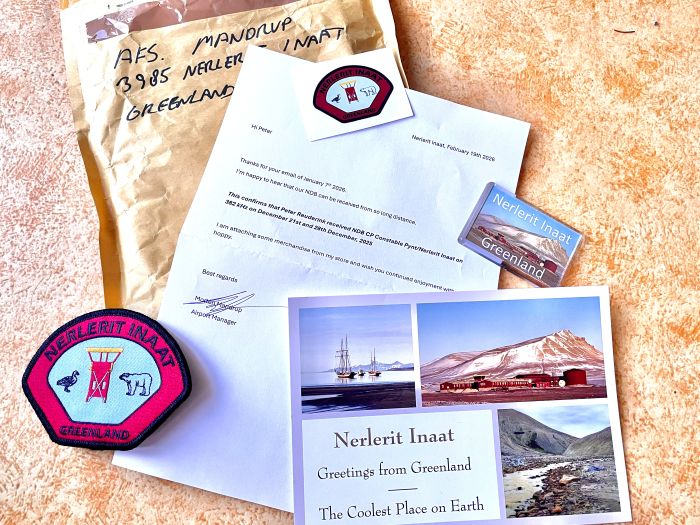
QSL NDB CP 386 kHz Constable Pynt / Nerlerit Inaat

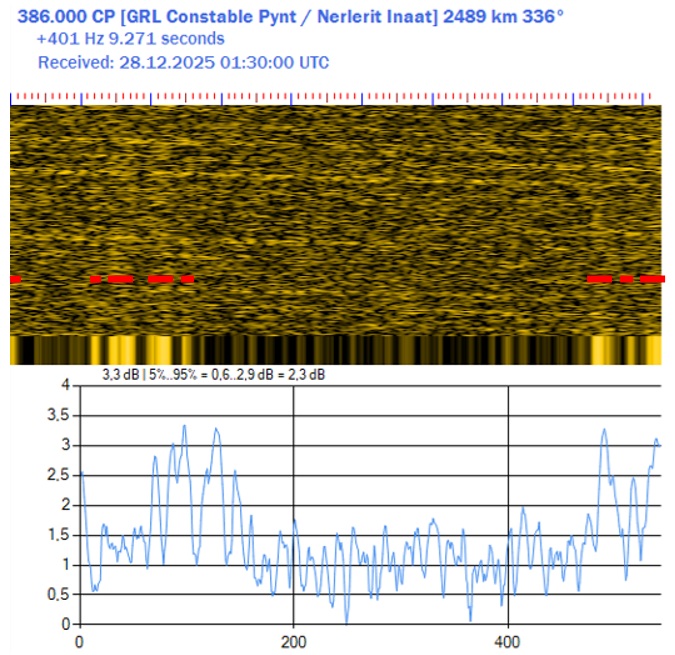
Receiving signals from the Arctic is always something special as they originate from very remote and often special locations. My reception of NDB CP Constable Pynt / Nerlerit Inaat on 386 kHz is no exception. Below my Pskov recording of the NDB CP signal (with red marks to emphasize the -.-. .–. morse code for CP)
Pskov recroding of NDB CP Constable Pynt / Nerlerit Inaat on 386 kHz

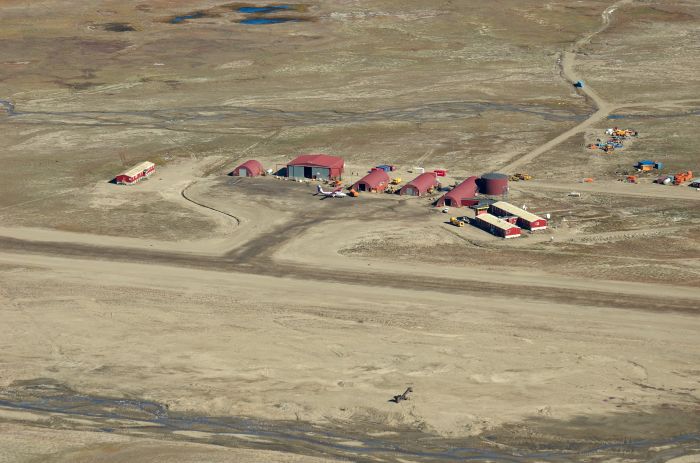
The Nerlerit Inaat airport was built in 1985 by the US oil company ARCO in connection with oil exploration in Jameson Land. It was sold to Greenland in 1990. The airport has around 15 employees, who have their home within the airport area.

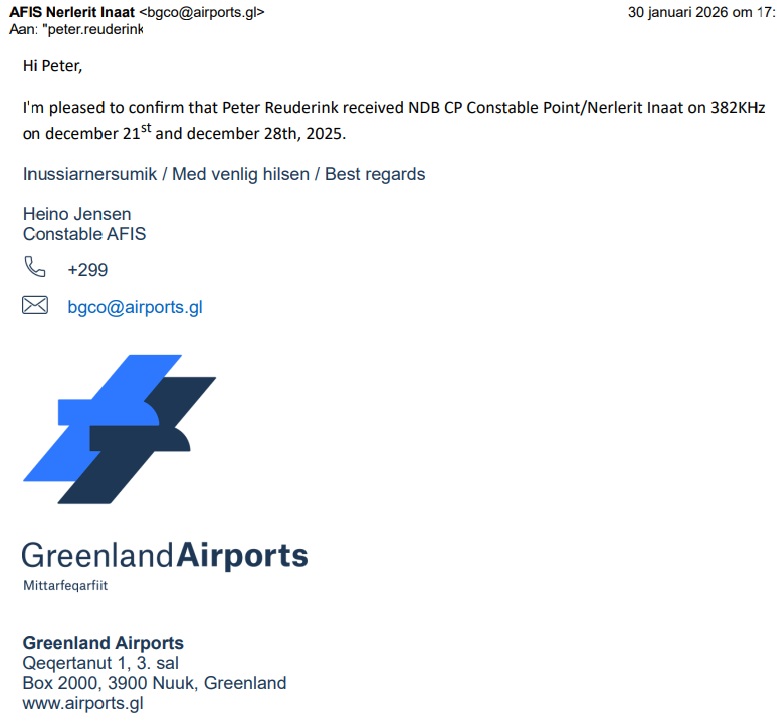
QSL for NDB CP Nerlerit Inaaat Airport 386 kHz… although the frequency quoted is wrong

No other settlement is reachable by road, making the airport possibly the one with smallest population reachable by road in the world. There is a road to a seaport around 2 km south of the terminal building, and some other roads in the area.

Nerlerit Inaat Airport
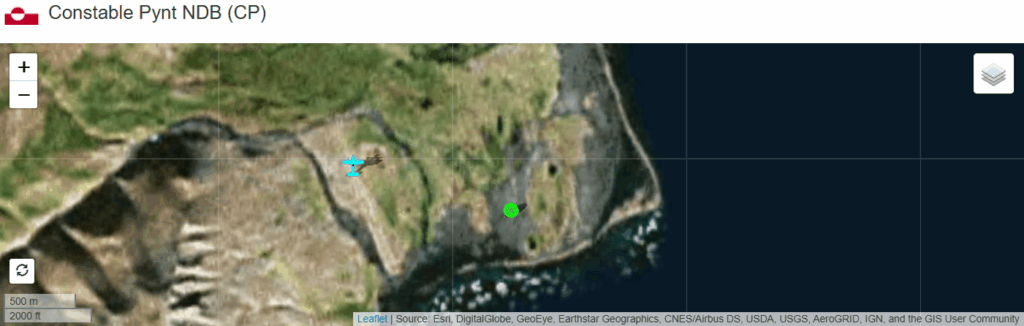
Nerlerit Airport and the NDB (green circle) at Constable Point (courtesy: OurAirports)

With connecting flights to Akureyri and Reykjavik in Iceland the airport acts as stopping off point for a number of expeditions into Jameson Land and Northeast Greenland National Park. More importantly maybe, it connects by helicopter to the settlement of Ittoqqortoormiit, with a population of 325 (in 2025). The settlement is situated 40 kilometers south east of the airport. The name Ittoqqortoormiit means “big house dwellers” in the Eastern Greenlandic dialect.

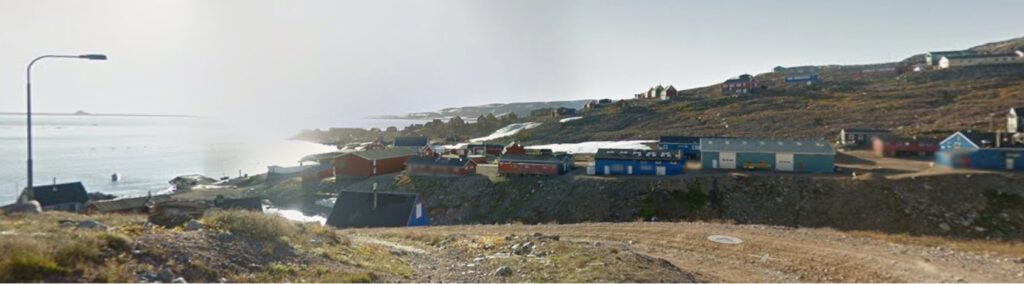
Ittoqqortoormiit village (Googlemaps)

Ittoqqortoormiit was founded in 1925 by Ejnar Mikkelsen and some 80 Inuit settlers (70 persons from Tasiilaq and four families from western Greenland). They were brought on the ship Gustav Holm and settled 400 kilometres south of the last known Inuit settlement in northeastern Greenland. The settlement was encouraged by colonial power Denmark who at the time wanted to increase their presence in North Eastern Greenland.

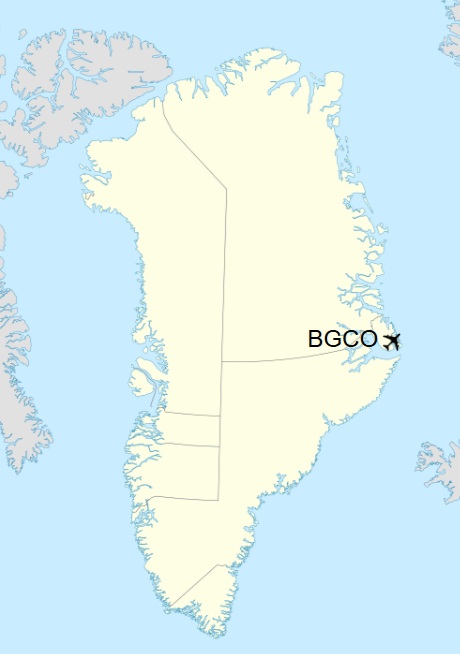
The location of Nerlerit Inaat Airport in Greenland

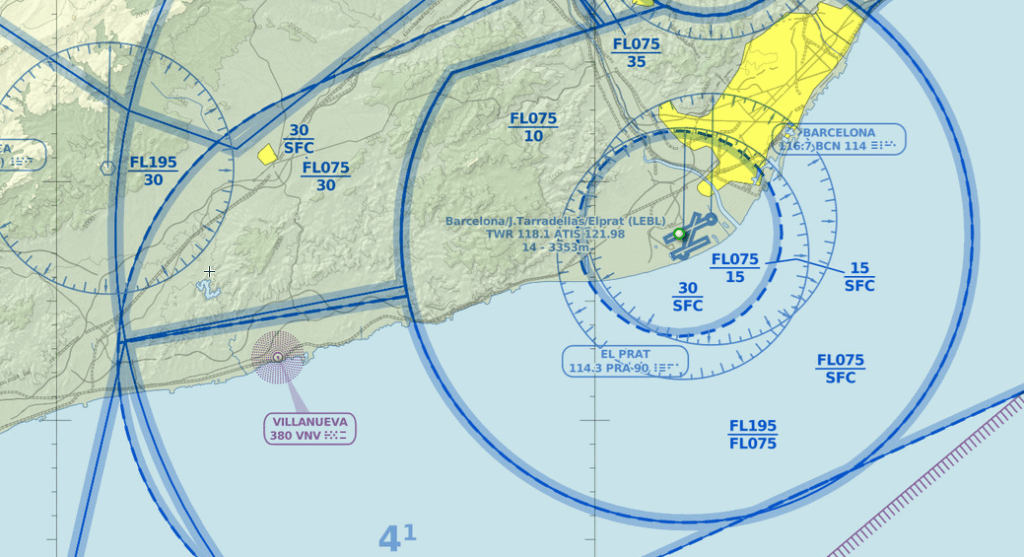
QSL NDB 380-VNV Vilanova i la Geltrú

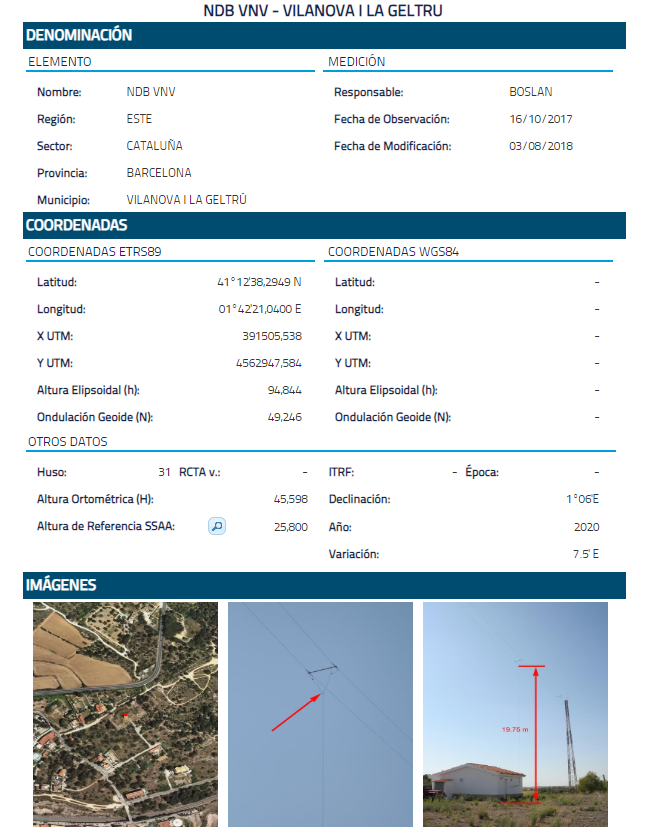
A QSL for NDB VNV from Vilanova i la Geltrú. Confirmed by Enaire the QSL shows the typical set-up for a Spanish beacon: 200W and a T-type antenna.

VNV is a beacon is associated with Barcelona Taradellas-El Prat airport. Not exactly in line with the runway. The Barcelona El Prat airport was renamed by the central Government of Spain to its current name on 21 December 2018 in honour of the first Catalan president under the current Spanish Constitution, Josep Tarradellas – a move widely criticised by the Generalitat de Catalunya and separatists due to non-consultation.

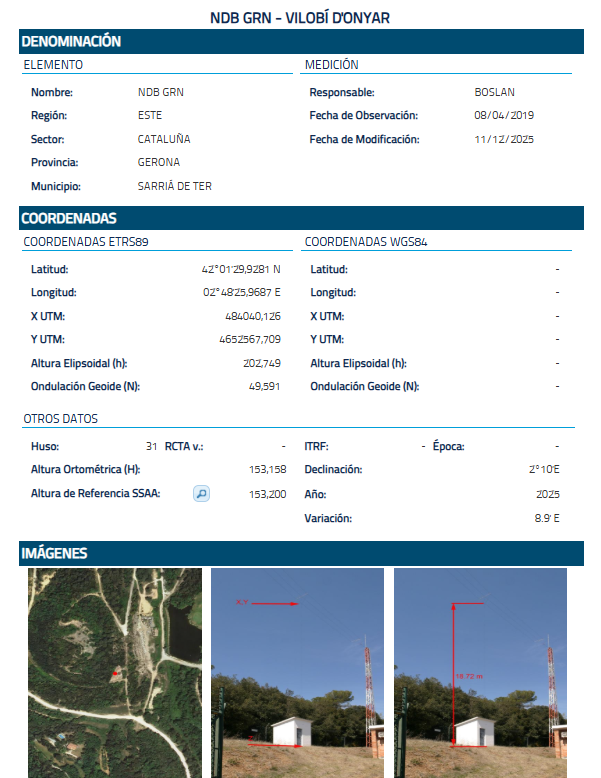
QSL NDB 412-GRN Girona

NDB GRN on 412 kHz is a beacon situated north of Girona Airport, in line with the runway. It is often listed as Gerona, which is the Spanish name for the city of Girona in Catalunya, but I prefer to use the name that the local population uses. My reception report was verified by Enaire via informacion@enaire.es .

The set-up of the beacon is typical for most of the Spanish NDBs: a 200 W transmitter with a “Sistema radiante de tipo T”:

Girona Airport was built in 1965 when there was not a lot of traffic. Passenger numbers grew spectacularly after Ryanair chose Girona as one of its European hubs, marketing it as ‘Barcelona-Girona’. In 1993, Girona Airport dealt with only 275,000 passengers; in 2008 passenger numbers increased to more than 5.5 million. But when Ryanair moved their Barcelona operations from Girona to the larger El Prat International Airport much of this was lost again. In 2024 around 2 million passengers used Girona Airport.

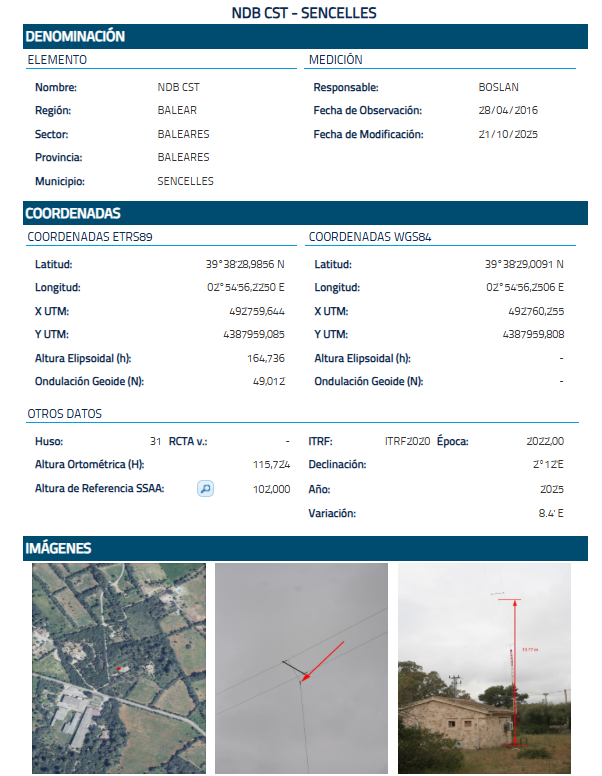
QSL NDB 351-CST Costix

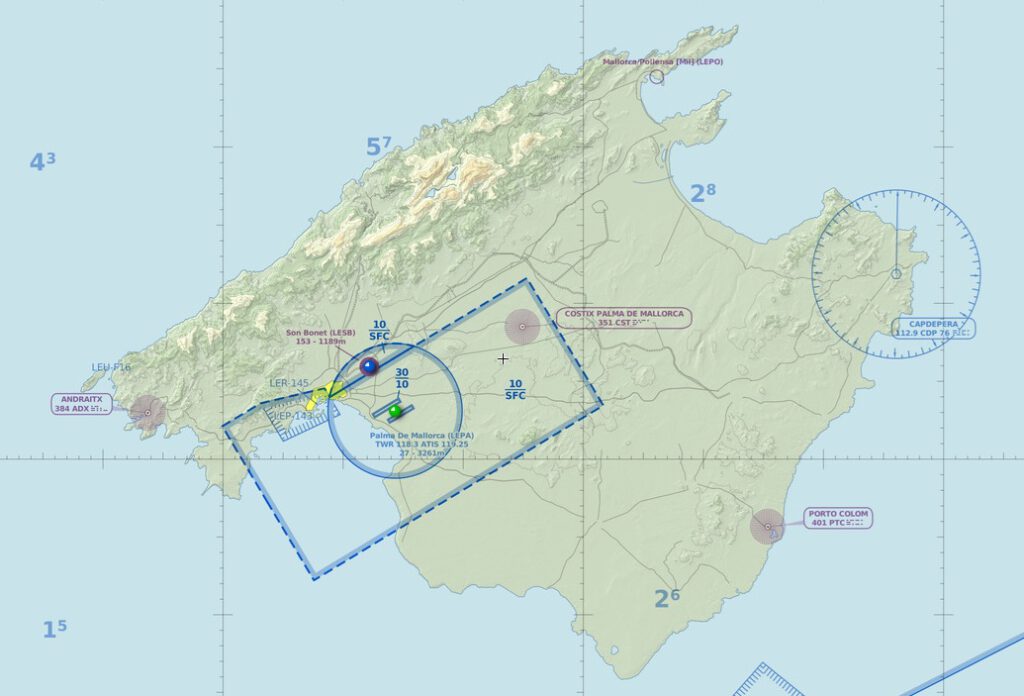
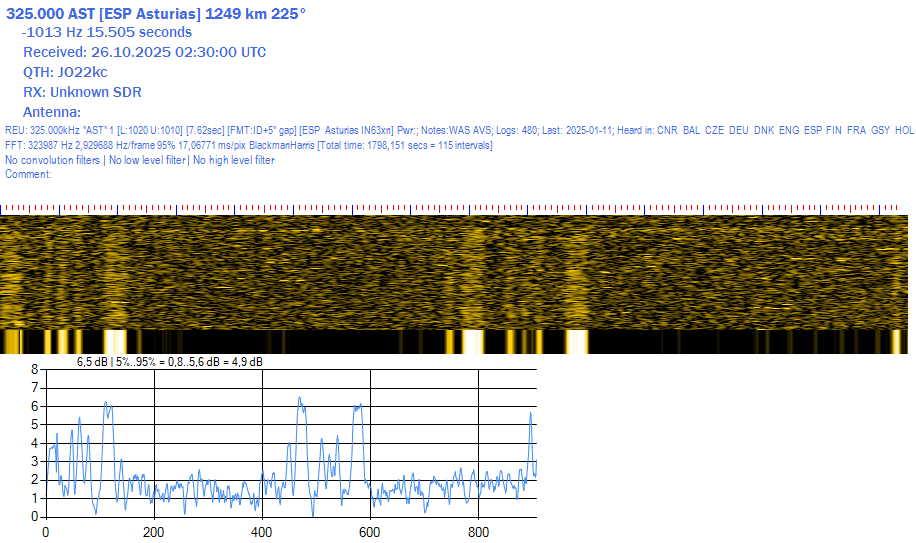
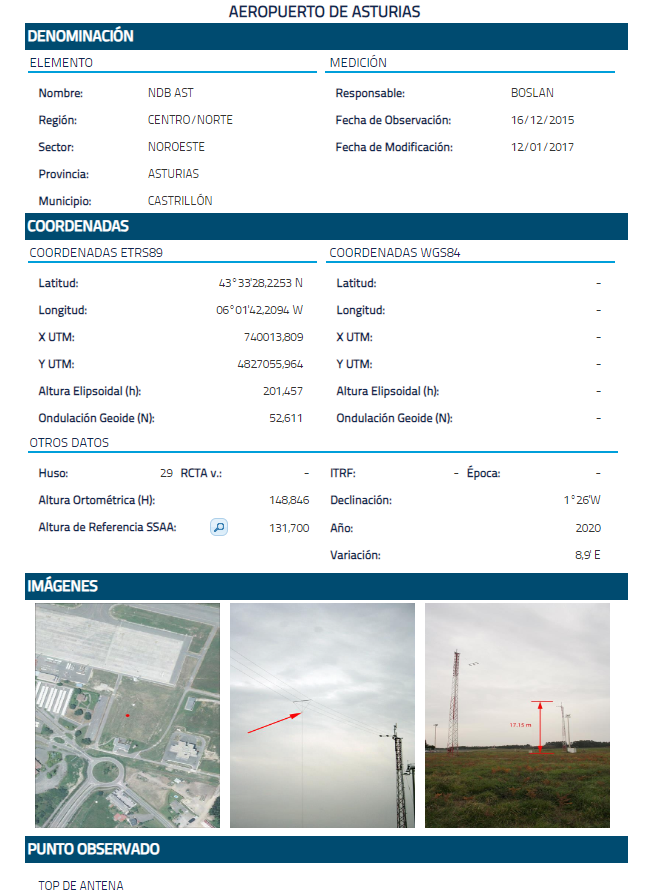
Enaire was so kind to confirm my reception of NDB CST on 351 kHz. This navigation beacon is located on Mallorca, the largest of the Baleares Islands. As always they included their nice data sheet:

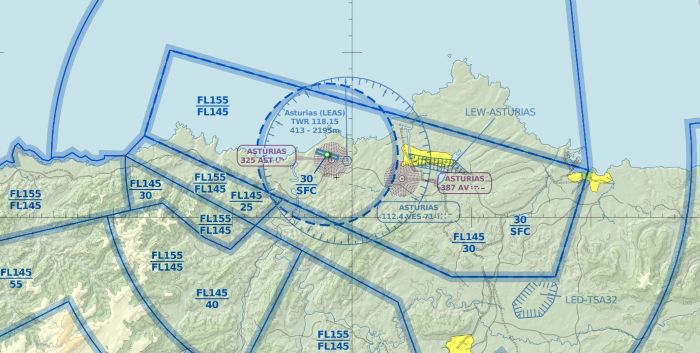
The other beacon I received from Mallorca was ADX. The picture below show both beacons… and a third one, 401-PTC, a beacon I didn’t receive yet.

QSL NDB VT Vitoria 308 kHz

Enaire (informacion@enaire.es) was so kind to confirm another couple of beacons from Spain that I received. This time I heard NDB VT from Vitoria on 308 kHz. As usual they sent their nice information sheet:

NDB 308-VT is one of the two NDBs for Vitoria Airport. The other beacon is is 345-VTA. Below you can see how they nicely align with both sides of the runway. Both antennas have a set-up which is a bit different from most Enair beacons: a “Sistema radiante de tipo margarita” as opposed to most Enaire beacons that have a dipole: “Sistema radiante de tipo T”.

QSL NDB 385-IS Ísafjörður

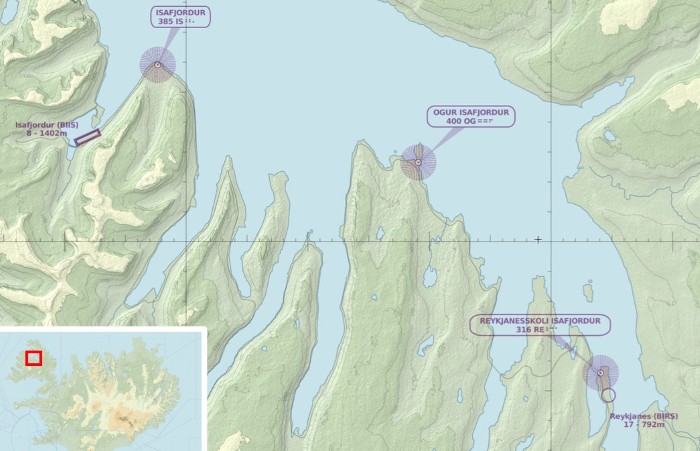
NDB 385-IS is located in northwestern Iceland. It serves the small airport of Ísafjörður. Located in the fjord the approach of this airport is quite challenging requiring flying along the mountains and making a sharp turn before landing.

Ísafjörður Airport

The beacon IS is located at the entrance of the fjord, situated on a cliff which seems to house several antennas:

The beacon IS Ísafjörður is one of the antennas located on top of the cliff

My reception report was confirmed by Hjalti Guðmundsson from Isavia.

QSL NDB 355-RK Reykjavik

Isavia was so kind to send me a QSL for 5 radio beacons from Iceland I received recently. See also previous posts of NDB GO, and NDB 387-NB and 415-OE. NDB RK Reykjavik operates Reykjavik Domestic Airport. The beacon is situated on the golf course of Golfklúbbur Seltjarnarnes.

NDB RK Reykjavik

Reykjavik Airport was constructed by the British Army during World War II on the site that was previously in use for sea planes mainly. After the war the airport was handed over to the Icelandic government. It acted as the main gateway for international flights from Iceland. But it was considered too small for the bigger jet planes introduced in the 60-ies which instead used Keflavik Airport (50 kms away).

Reykjavik Domestic Airport

Ever since there have been discussions on the future of Reykjavik Airport. In 2019 that resulted in the closure of the shortest runway, allowing housing development projects. Other than that no decision has been made on closure or relocation.

Mainflingen antennas demolished… and what about my old QSL?

Maybe it is “old man” emotional, but then again. In Germany they are destroying communication infrastructure like they are destroying energy infrastructure, while at the same time they tell us “we are at war with Russia”.

So in Mainflingen (well known to us DX-ers) 3 antennas went down. Their demise can be seen in this YouTube video: https://www.youtube.com/watch?v=1pA9vgduChA

Mainflingen is the home of DCF77, the time signal station that transmits on 77.5 kHz. And no worries… DCF77 is still alive and kicking. But Mainflingen was also the backup station for the Deutschlandfunk, broadcasting from Donebach on 153 kHz. And of course I QSL-ed this station in the 80-ies… but rather than 153 it had 155 kHz on the QSL. Was it the backup from Mainflingen I received 46 years ago?

Another thing I didn’t know but found out: the antennas in Mainflingen are part of the logo of the community of Mainhausen which Mainflingen is a part of.

QSL NDB 340-GJ Gjögur Airport

During the CLE-321 event I heard 5 new beacons from the north coast of Iceland. Beacons from the south and south-west are heard more often here in the Netherlands. My guess is that they benefit from transmission over water. This time there were excellent conditions to the Arctic regions allowing me to pick up these beacons including NDB 340-GJ Gjogur Airport.

Gjogur –. .— on 340 kHz as registered with Pskov software

Earlier I wrote about the two beacons serving Akureyri Airport, a bigger international airport. This post is about 340-GJ for Gjogur Airport, or Gjögurflugvöllur.

Gjogur is one of the airports that is purely there for the benefit of the local population, most likely sponsored by the Icelandic government. It is staffed part-time by an AFIS controller, and only opens for Norlandair flights, which are twice a week in the winter and once a week in the summer. In the winter, the airport is the only means of access to the entire district, as the access road is impassable.

There is a very nice slideshow “Descent into the Fjord” by Rajan Parrikar available on the internet that gives a nice impression of a flight to Gjogur Airport.

« Older posts

© 2026 Peter's DX Corner

Theme by Anders NorenUp ↑