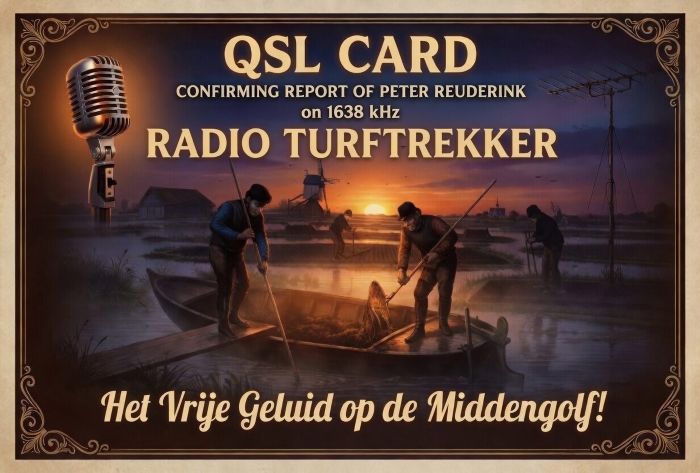
DX-ing mediumwave pirates is nice because sometimes you have email correspondence with fellow radio enthusiasts. I received Radio Turftrekker on 1638 kHz. Operator Jeroen wrote that he was ‘spoon-fed’ with mediumwave pirate radio as his father is also a mediumwave pirate. As a small child, he was listened in. Occasionally he was allowed to say something on the radio.
But it is also nice because some of the station names used remind you of the heritage of the Netherlands. Radio Markies is an example. And so is Radio Turftrekker. While the next paragraphs are not really about radio or DX, I just enjoyed writing them. Skip it if you want, but if you like it, please leave a comment!
About the name of Radio Turftrekker
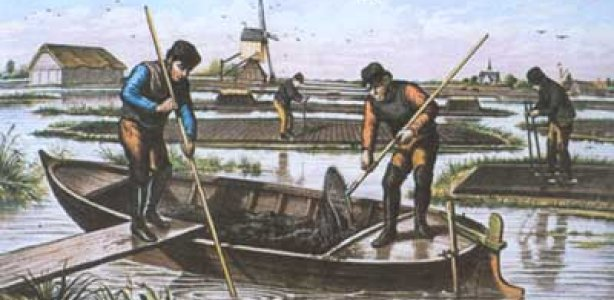
A “Turftrekker” or “Peat Puller” was a worker that extracted peat using a scoop with a net attached. Peat was used as a fuel to heat houses before we switched to coal (and Holland what late in doing so). However, with the peat being extracted, deep pools of water formed in Holland.
“God created the earth, except for the Netherlands, for the Dutch did that themselves” is a well-known Dutch saying referring to the polders and reclaimed lands. But what is often forgotten is that the same Dutch first lost almost half their country due to peat extraction.
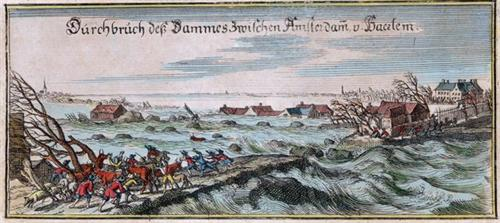
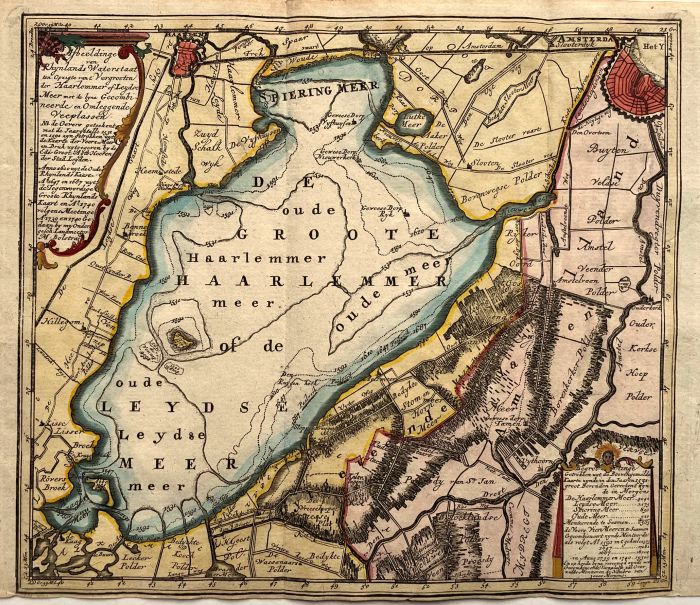
The prime example is the Haarlemmermeer (Haarlem Lake), the polder in which Schiphol (Amsterdam International) Airport is situated today. In the Middle Ages four lakes were formed as a result of peat reclaiming. Additional illegal reclaiming and storms resulted in the collapse of dikes, allowing the lakes to merge into what became the Haarlemmermeer. That lake was so large that it became an inland sea, and with southwesterly storms, it expanded ever further in the direction of Amsterdam.
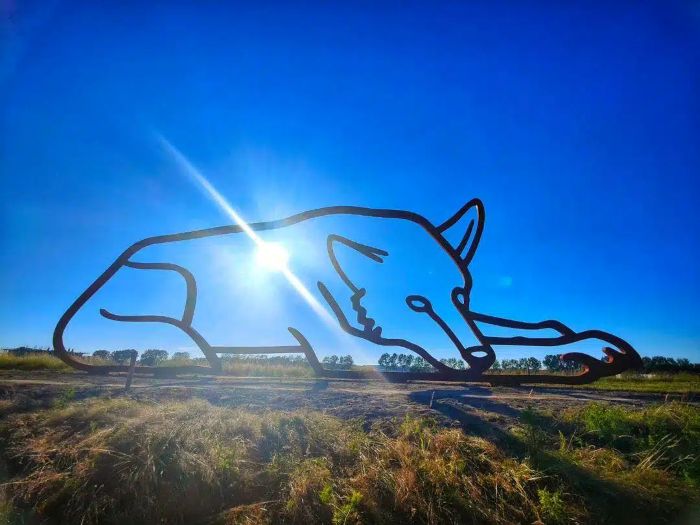
The Haarlemmermeer acquired the nickname “Waterwolf” as the water consumed more and more land. A beautiful artwork created in 2024 visualizes this. The Waterwolf seems to be at rest in this statue, as is the Haarlemmermeer.
Plans were made to reclaim the Haarlemmermeer as early as the 18th century. However, by then the lake was too large to be drained with windmill technology applied in the Beemster, Wormer, and Schermer polders. And so nothing could be done and devastating storms in 1836 caused parts of Leiden and Amsterdam to flood.
But fortunately there was the introduction of the steam engine. In May 1840, thousands of laborers began digging a 60-kilometer-long ring canal and constructing a ring dike with shovels and spades. Three steam pumping stations were built: De Leeghwater, De Cruquius, and De Lynden. On July 1, 1852, the Haarlemmermeer was completely drained, and the development and parcelling of the more than 18,500 hectares of new land could begin.
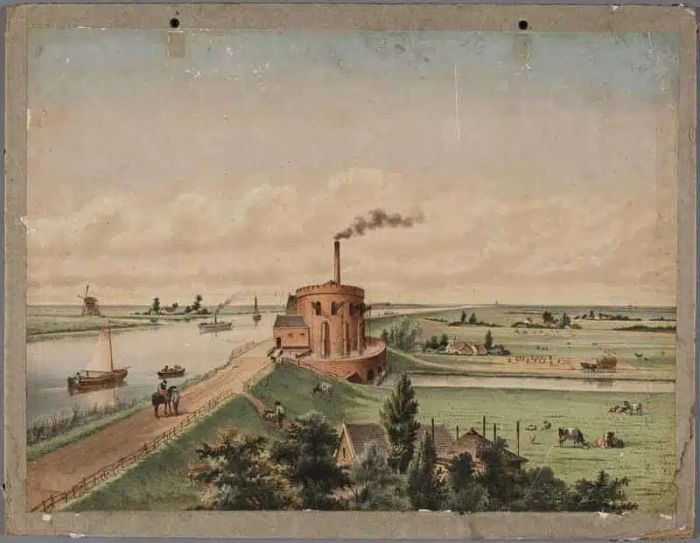
Back to Radio “Turftrekker”. Jeroen mentioned he didn’t have a QSL card. I proposed this design based on the school picture shown above. What do you think?


Excellent, colleague. Congrats
Hi Miguel,
Thank you for reaching out. I added your interesting weblog to my list of blogs on my site.
Kind regards,
Peter
Excellent story! Please tell us more!
Thank you Rolf!
Hmm, in 2022 I got a full detailed colour eQSL by Radio Turftrekker.
Hi Klaus-Peter. Congratulations and lucky you!
Maybe it was his father operating under the same name? I don’t know.
73s, Peter
Very interesting.
Thanks.