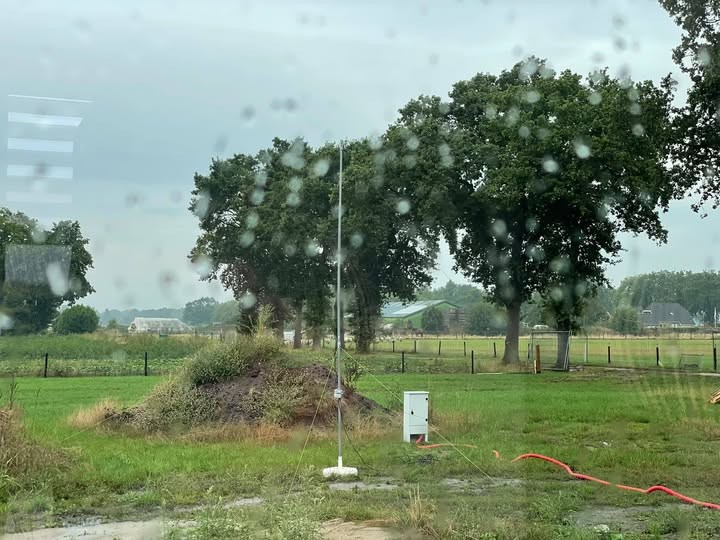
OK, have to admit that I had an antenna up and running on the attic of our new house, but that was indoor… This is the first outdoor antenna I put up, and let’s see. First impression is that the noise floor is pretty low, but local thunderstorms spoiled listening. Next weekend there is a CLE for NDB enthousiasts, we’ll see!
VOSR International (Voice of Shortwave Radio) is a shortwave radio program focused on shortwave listening, equipment, history, listener reports, and related topics.It is produced and hosted by Jeff Silvers (also known online as WaveCrest Guy or similar handles), a shortwave enthusiast based in Hawaii (with mentions of Molokai and time spent on Oahu). The show started in early 2025 as a monthly program and has expanded over time.
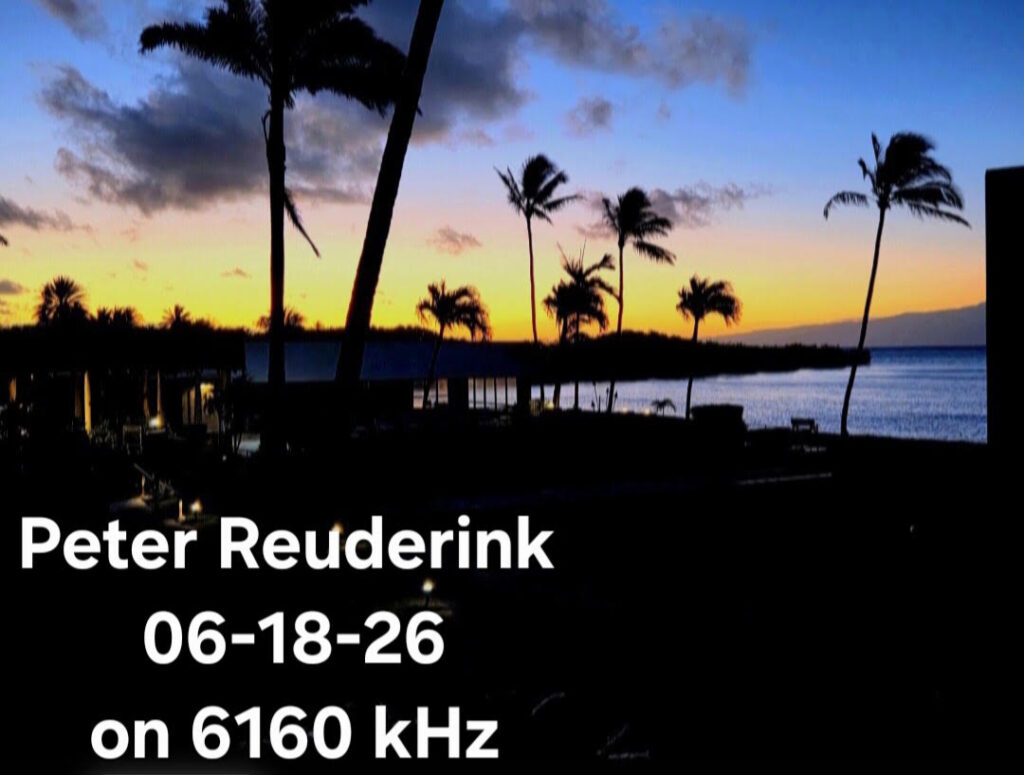
QSL card from VOSR via Shortwave Gold 6160 kHz
You can listen to VOSR International via Radio Miami International and Shortwave Gold broadcasting from Winsen, Germany. Reception reports are welcomed via vosrint(at)yahoo.com, and the program features a mailbag segment, guest contributions, equipment discussions, and historical or practical shortwave content. Past episodes are available on the official website and the WaveCrest Guy YouTube channel.
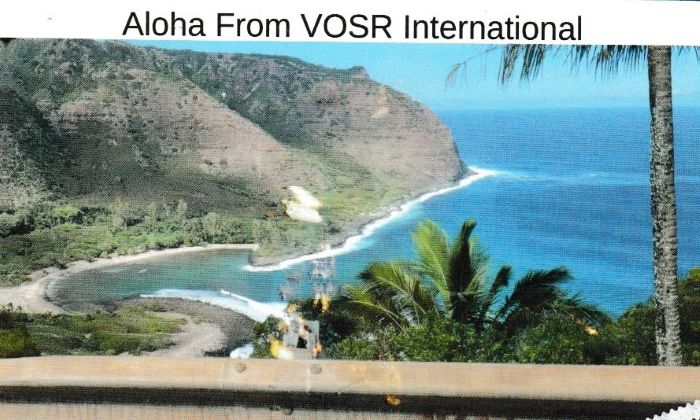
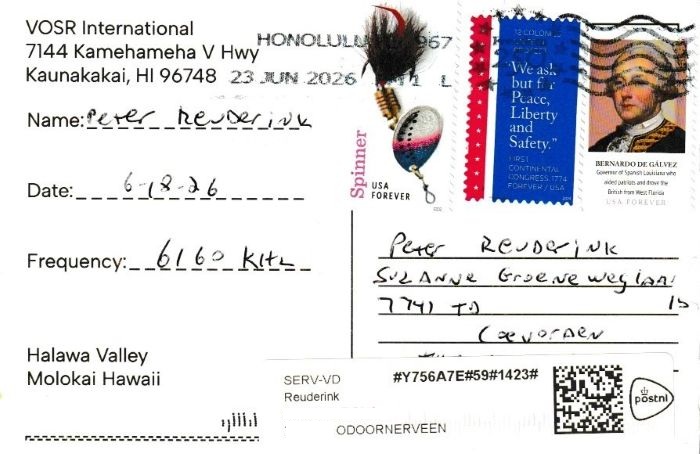
QSL card VOSR via Shortwave Gold 6160 kHz
My reception report was answered within a day by email and an e-QSL. The real QSL card arrived 29 days after it was stamped in Honolulu Hawaii.
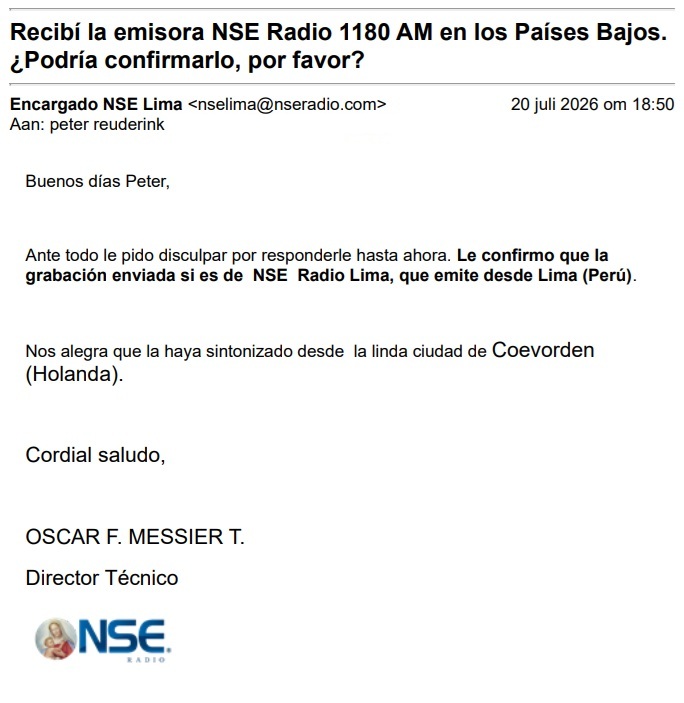
A QSL for my reception of NSE Radio from Lima, Peru, broadcasting on 1180 kHz mediumwave.
Reception quality was poor. With good DX ears the ID is recognizable in the first clip at 4 seconds: “NSE Radio…”.
The second clip features a female voice with messages and a typical tune in the background. It sounds very familiar, I think it was in one of my childhood piano lessons, but can’t find the tune anymore. Anyone?
NSE is an abbreviation of Nuestra Señora del Encuentro con Dios. Broadcasting on 1180 AM from Lima, Peru, this Catholic station is part of the broader NSE Radio and TV network dedicated to evangelization. The underlying Marian devotion and apostolic works trace their inspiration to Father Rodrigo Molina, with the title “Nuestra Señora del Encuentro con Dios” emerging around 1994 in Spain; the media ministry itself has more than 20–30 years of experience and has expanded across Peru (including stations in Arequipa and Cusco) as well as to other Spanish-speaking countries such as Chile, Argentina, Colombia, and beyond, while also producing content shared with partners like EWTN, Radio Católica Mundial, and Vatican Radio.
The Lima AM outlet (historically noted at around 10 kW) serves as a key production and live-broadcast hub, airing 24-hour programming that emphasizes religious teaching, spiritual formation, evangelization, sacred and other music, news, cultural and educational content, and special live coverage of papal events, all aimed at drawing listeners closer to God through Mary in accordance with Catholic Scripture and Tradition, largely sustained by volunteer efforts.
BDXC : SWL 2262 PRe VERON : NL 14228 If you want to get in touch, just leave a message on one of my posts. Please note that I don't publish email addresses of verifiers which are not part of the public domain. So if you don't see the QSL address, just leave a message and I'll get back to you.
This is just a hobby site. Feel free to copy anything on my weblog. A link back to my site is appreciated when you do so. I try to provide accurate information, but if I'm wrong: don't blame me! I'm also not responsible for the use of sites I provide links to. I try to respect copyright rules, but should you think I made an infringement: just let me know via a message on the corresponding post and I will act accordingly.